8.4 GTKWave simulator
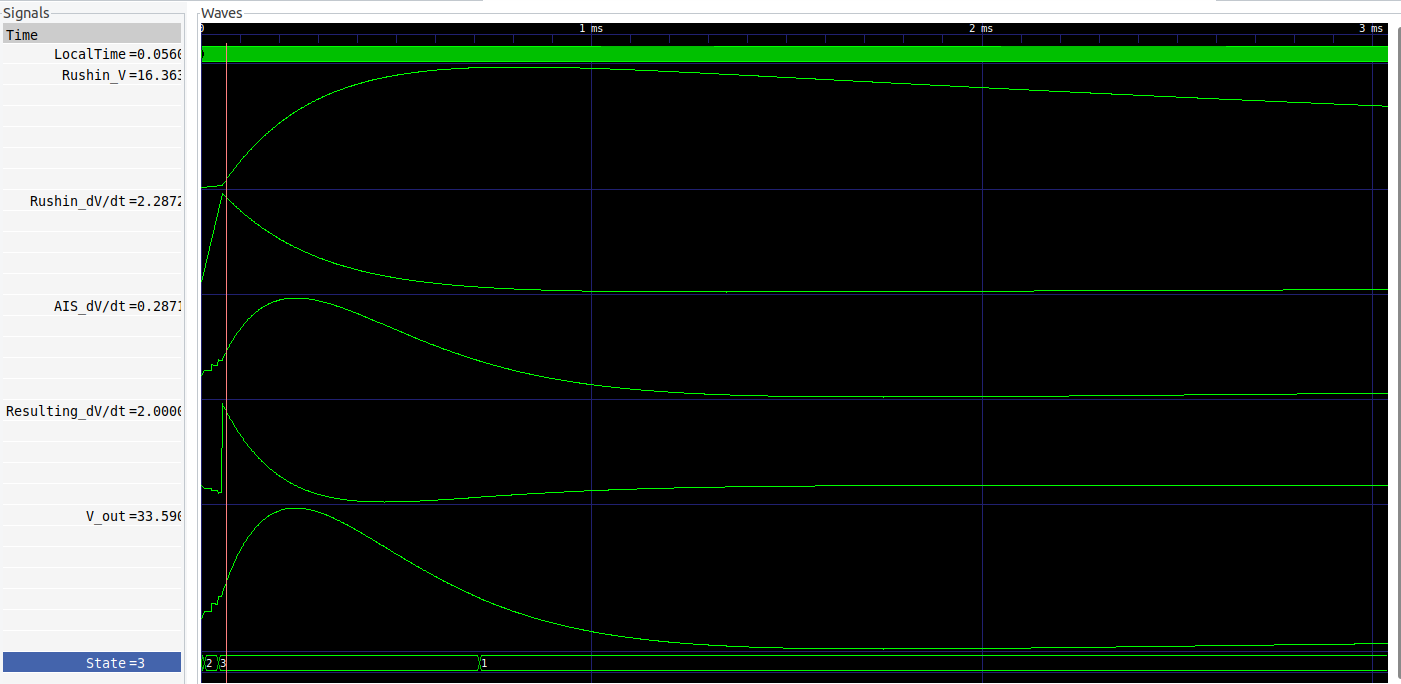
Although it remains almost entirely hidden for the average user, the simulator is essentially an electronic design software. It produces an ’ObjectName.vcd’ file that, correspondingly, can be analyzed using the tools of electronic design. One of the popular tools is GTKWave. The contents of the .vcd file can be displayed as shown in 8.1. (To reproduce the figure, one has to switch the signal forms to ’analog stepwise’ and ’analog interpolated’, respectively, and increase the ’insert analog height extension’ to the single-text line annotation.)